Gamification Field Trip

The Battle for Scientia Terra

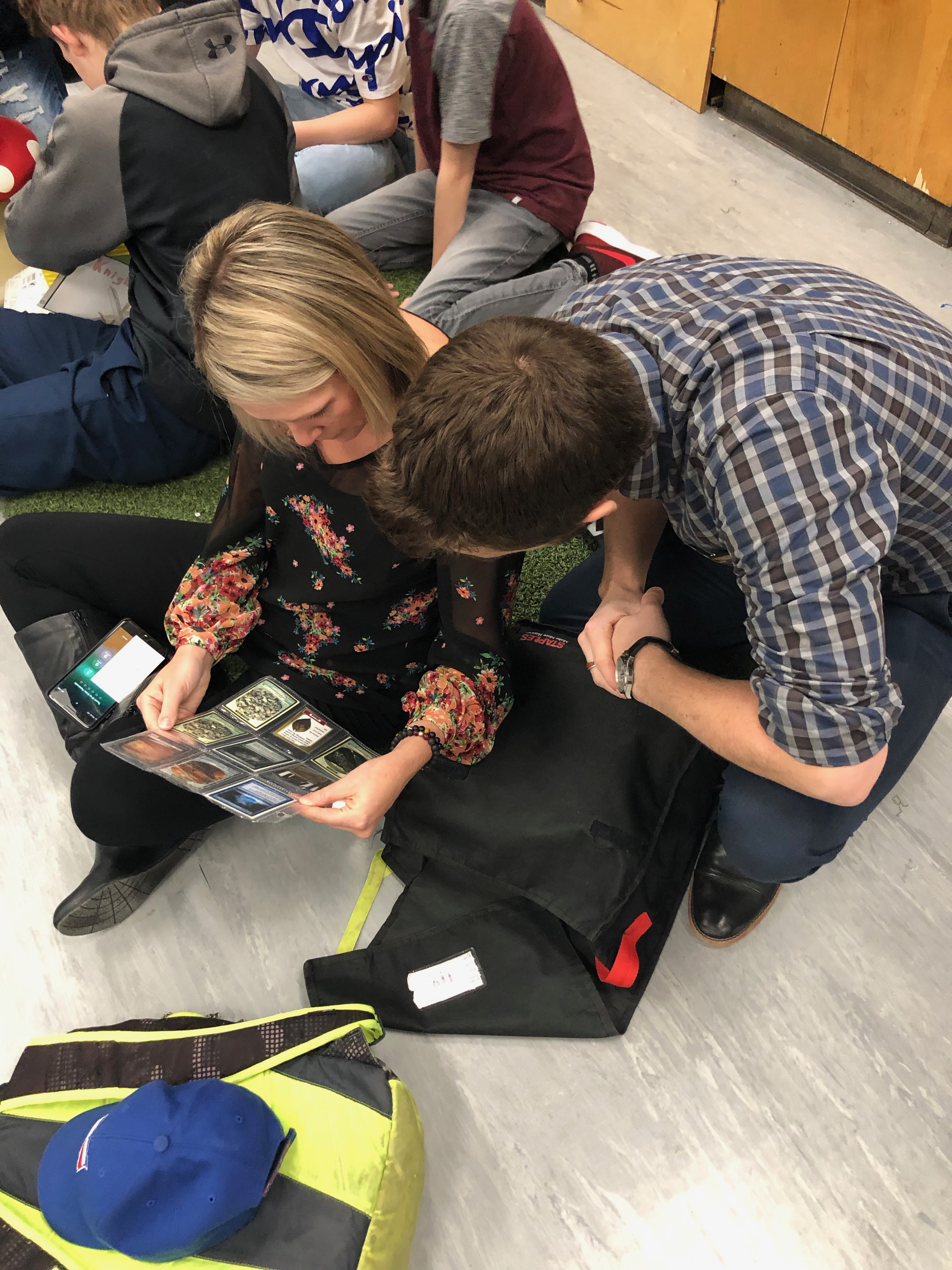
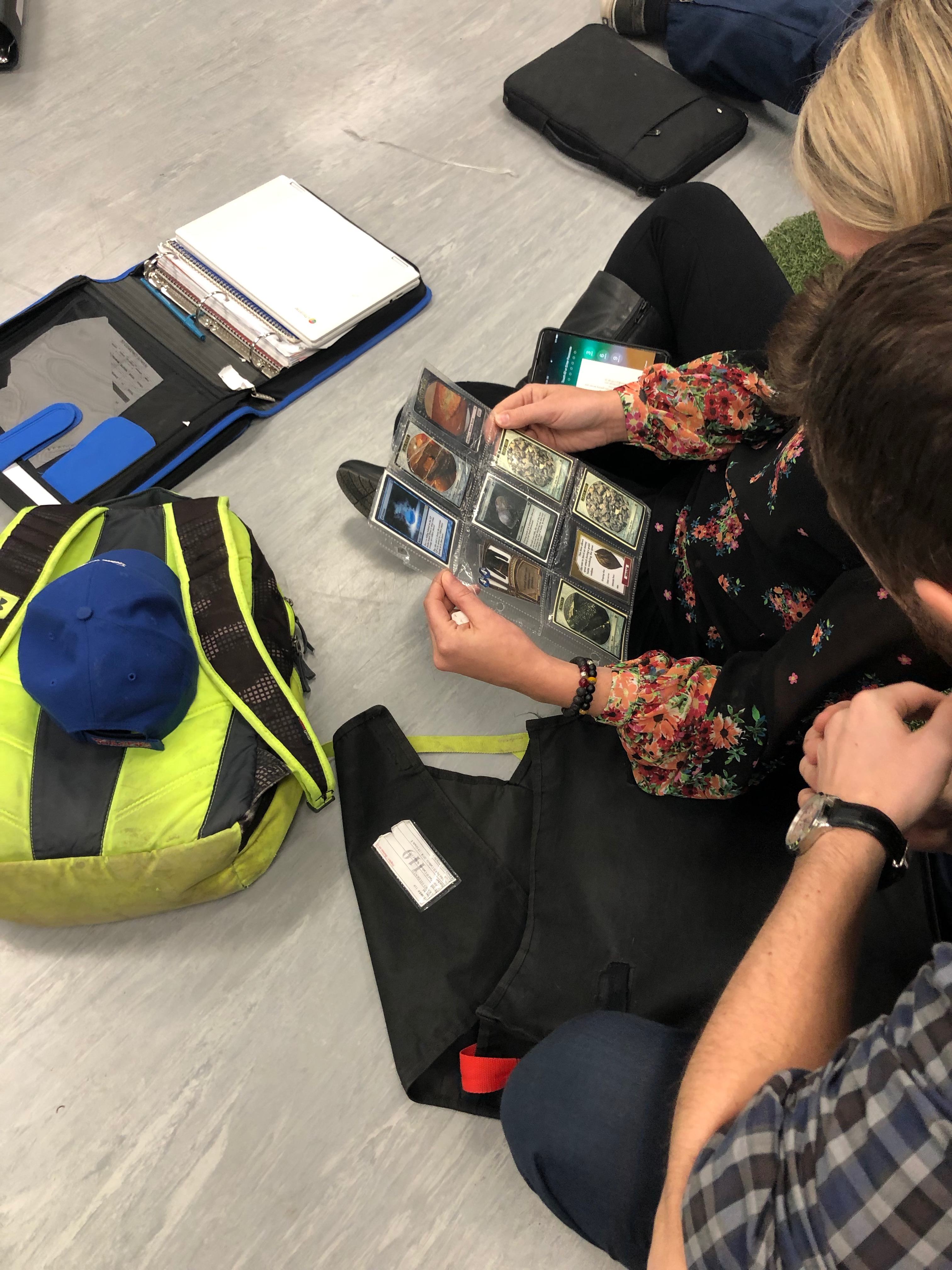
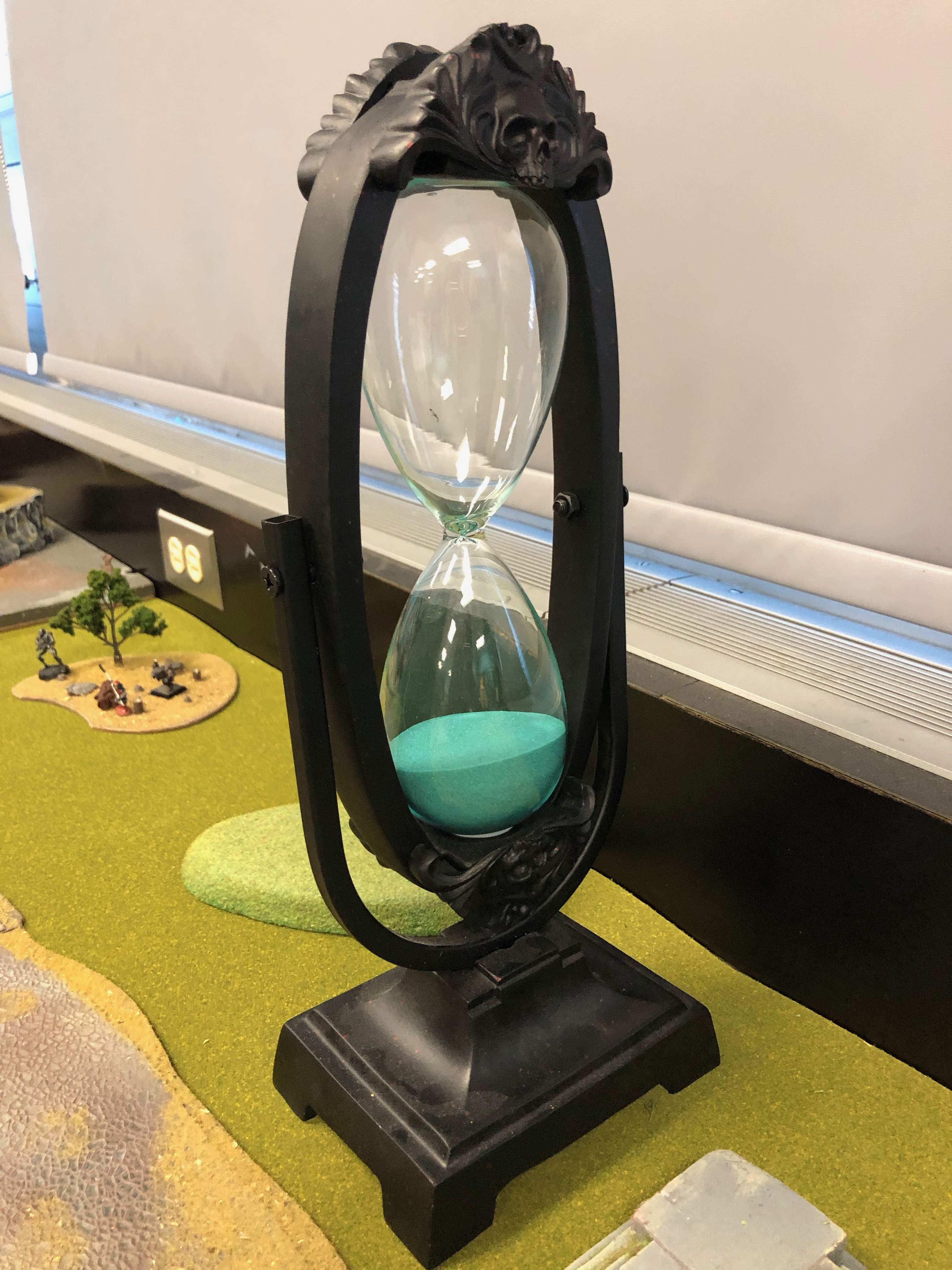
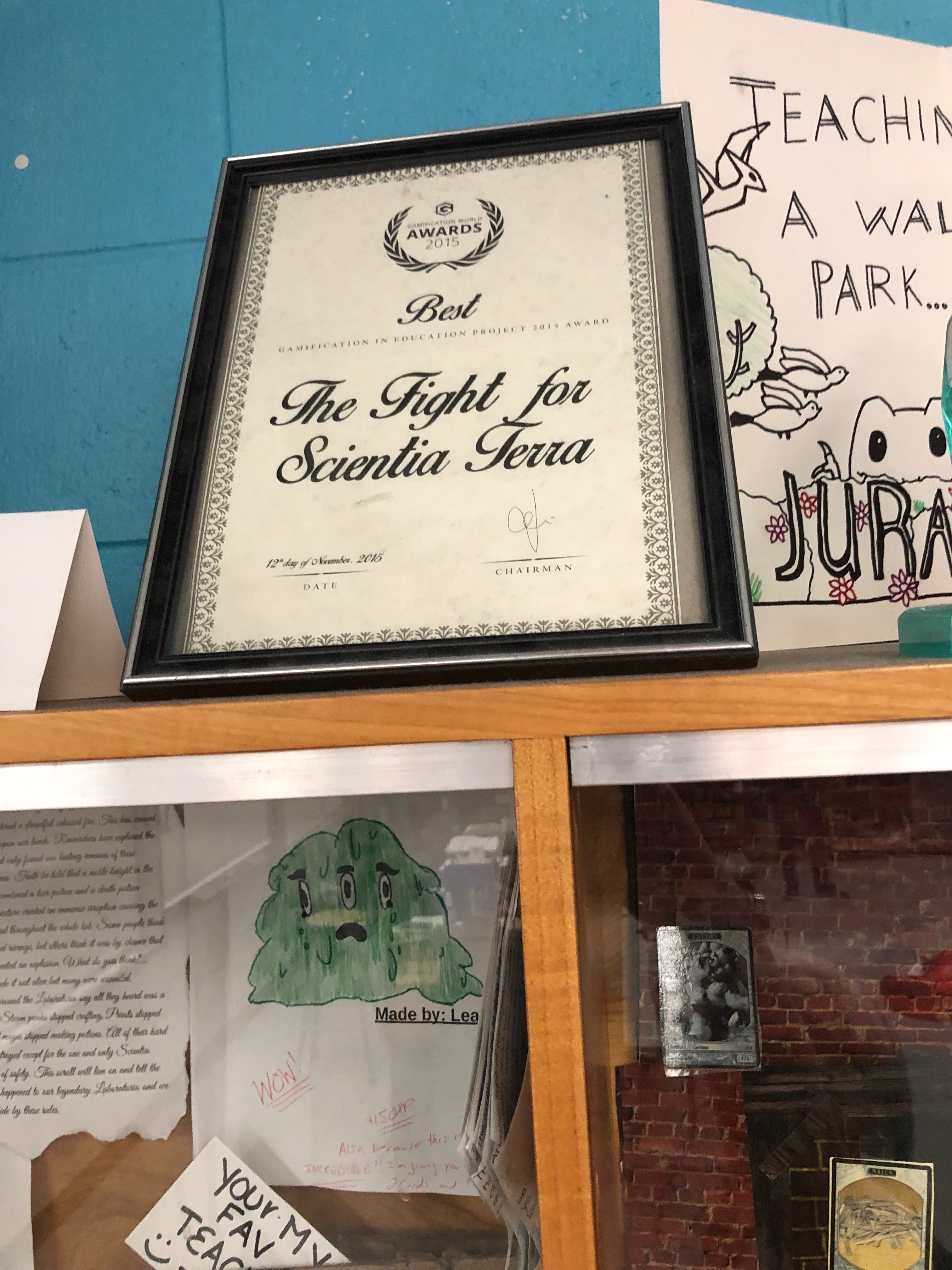
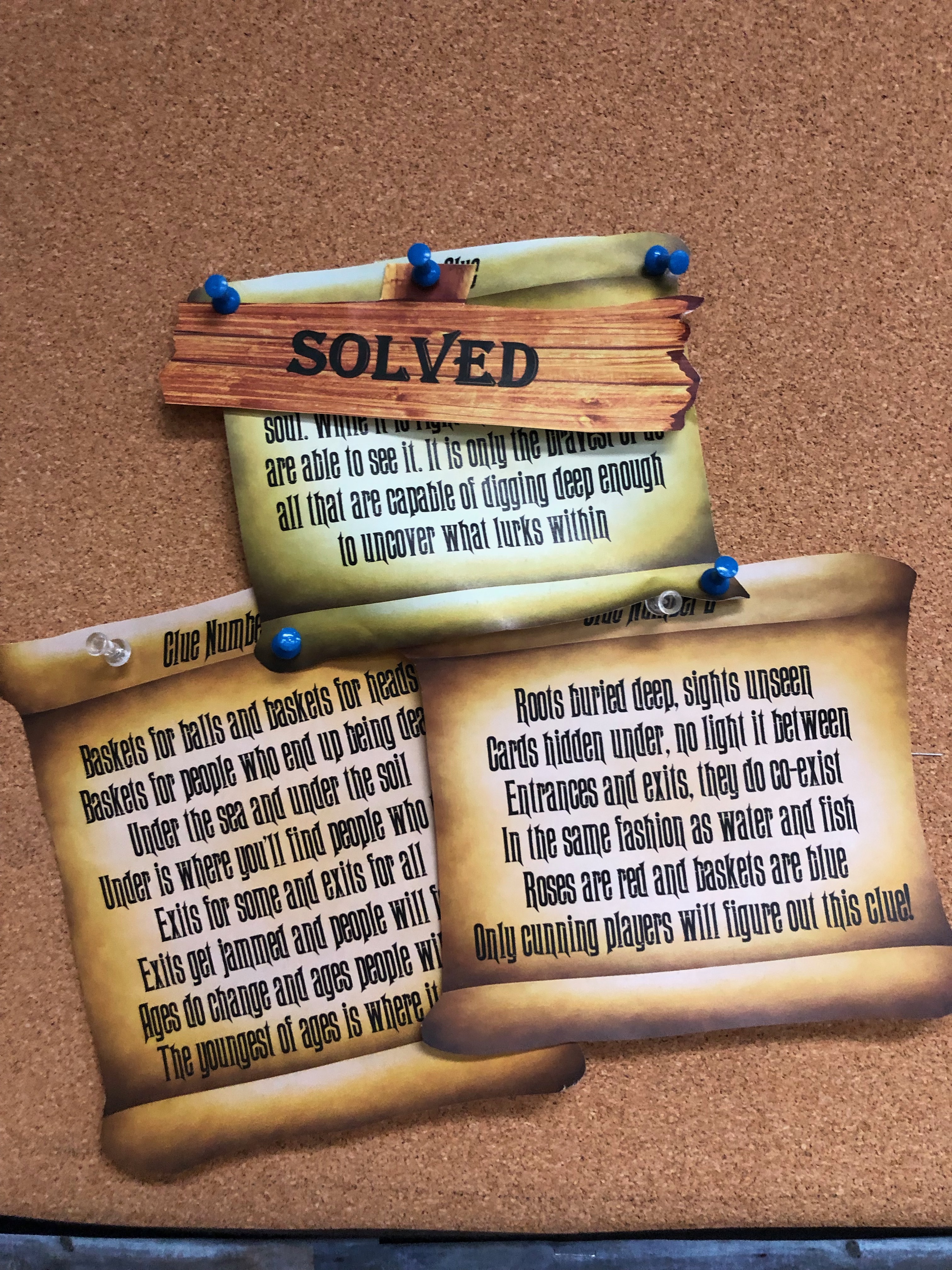
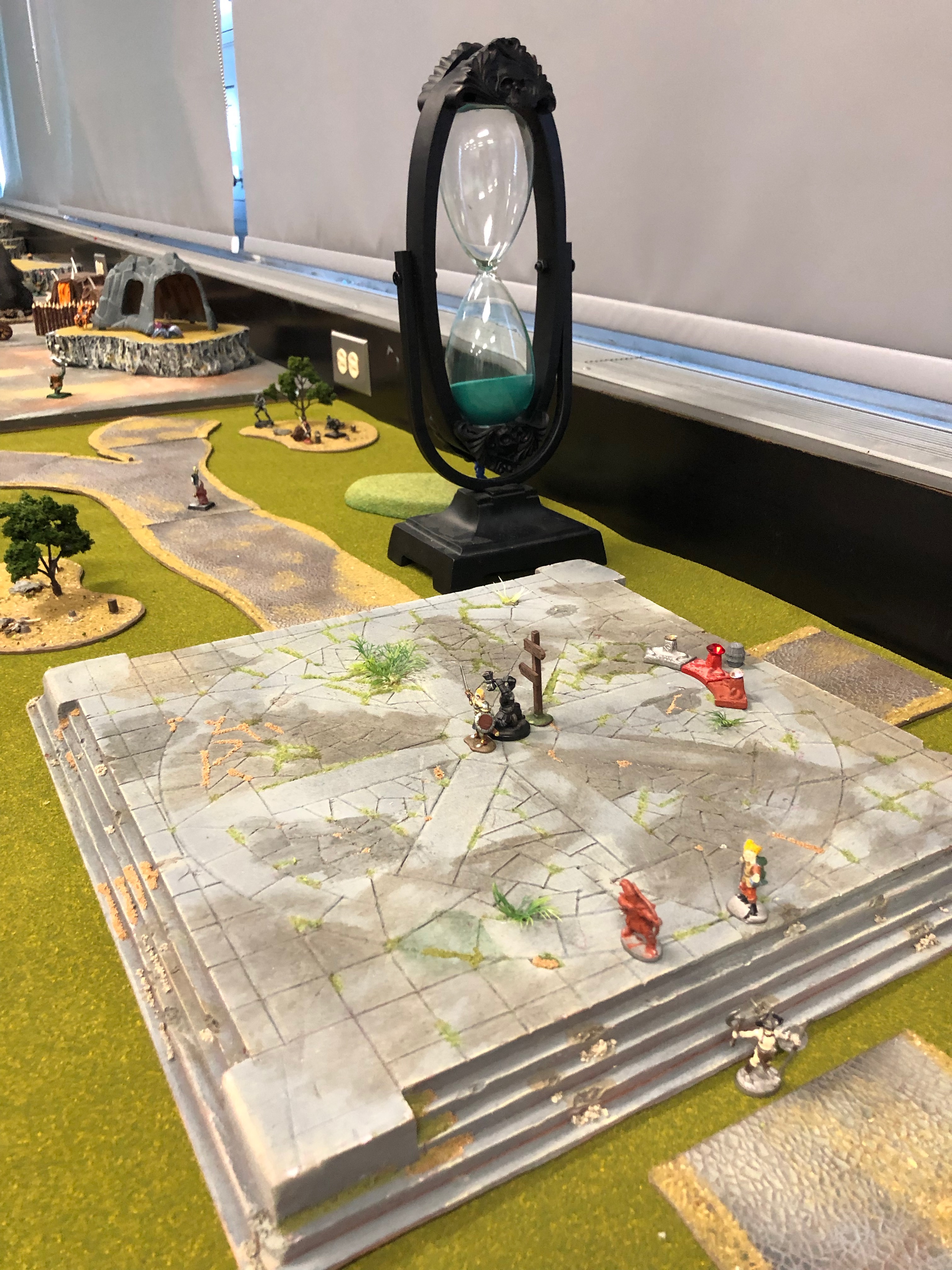
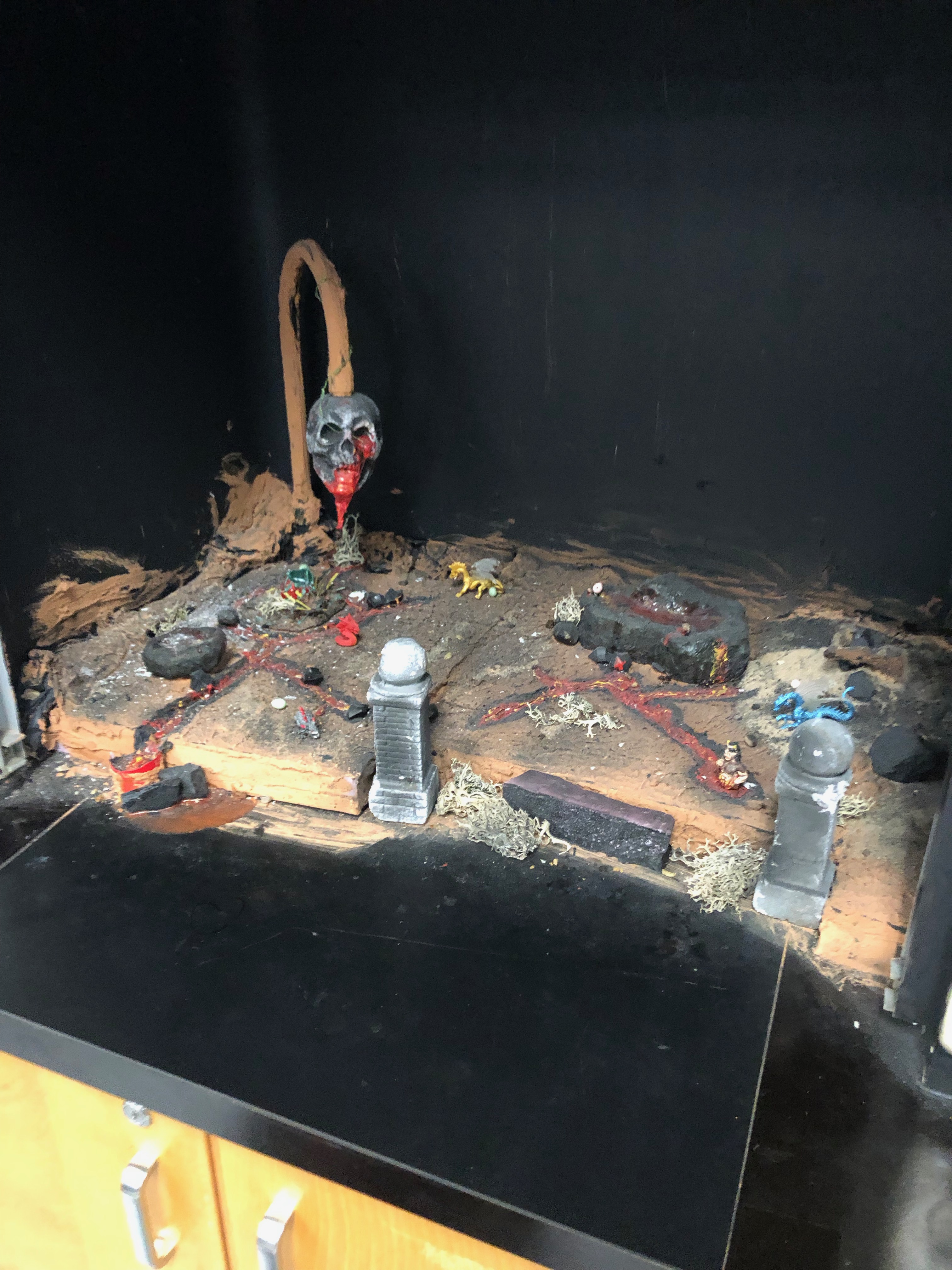
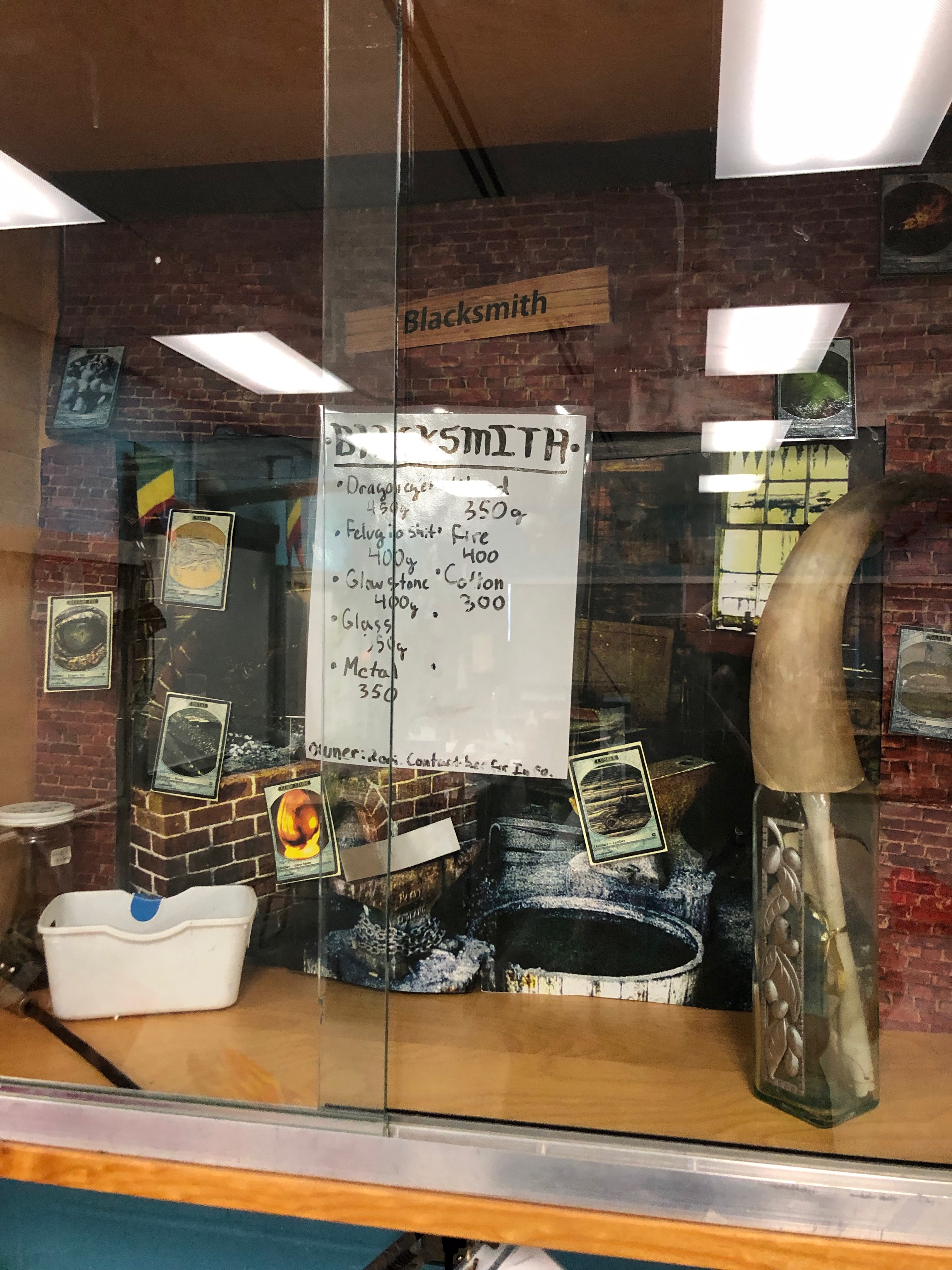
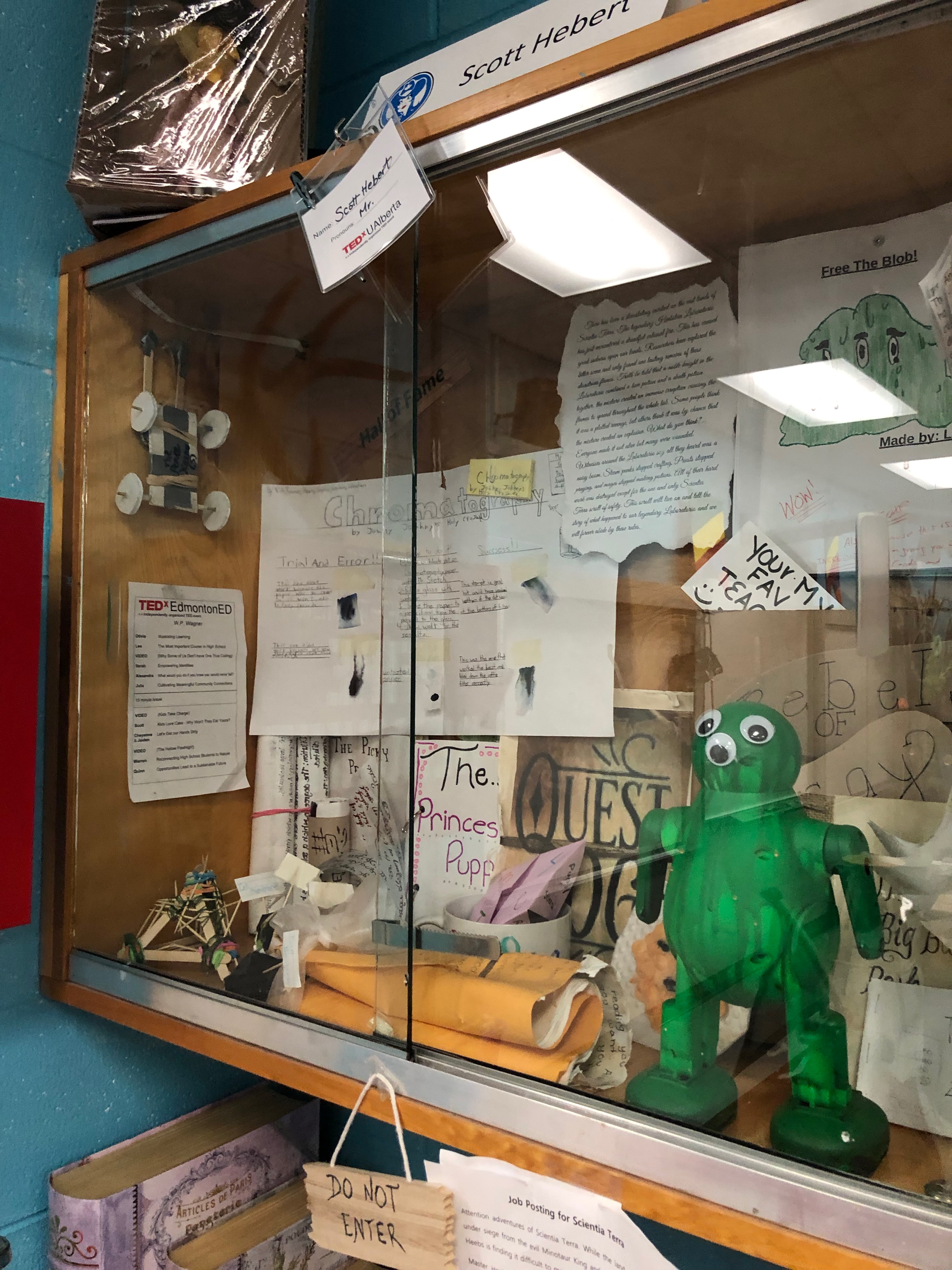
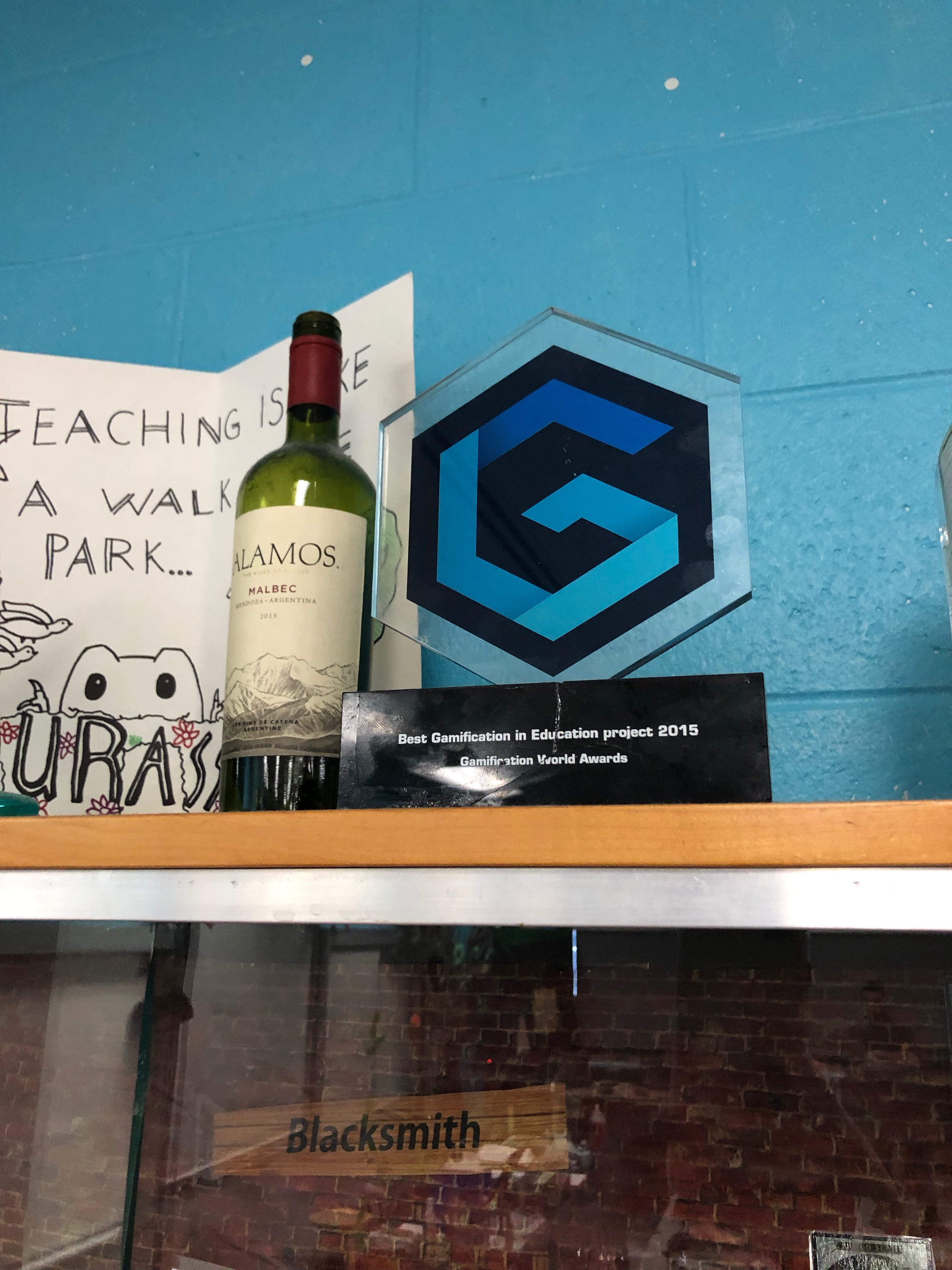
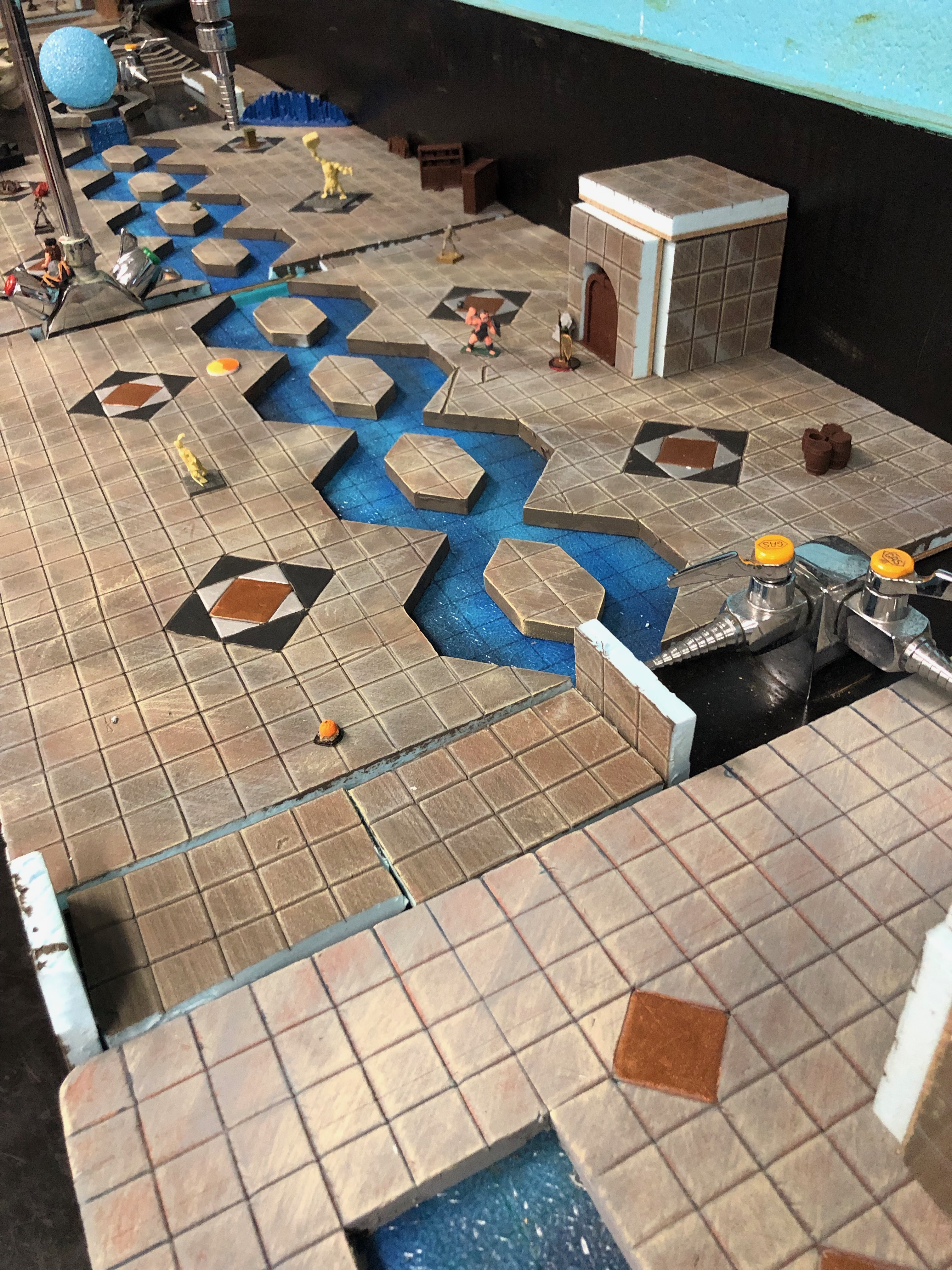
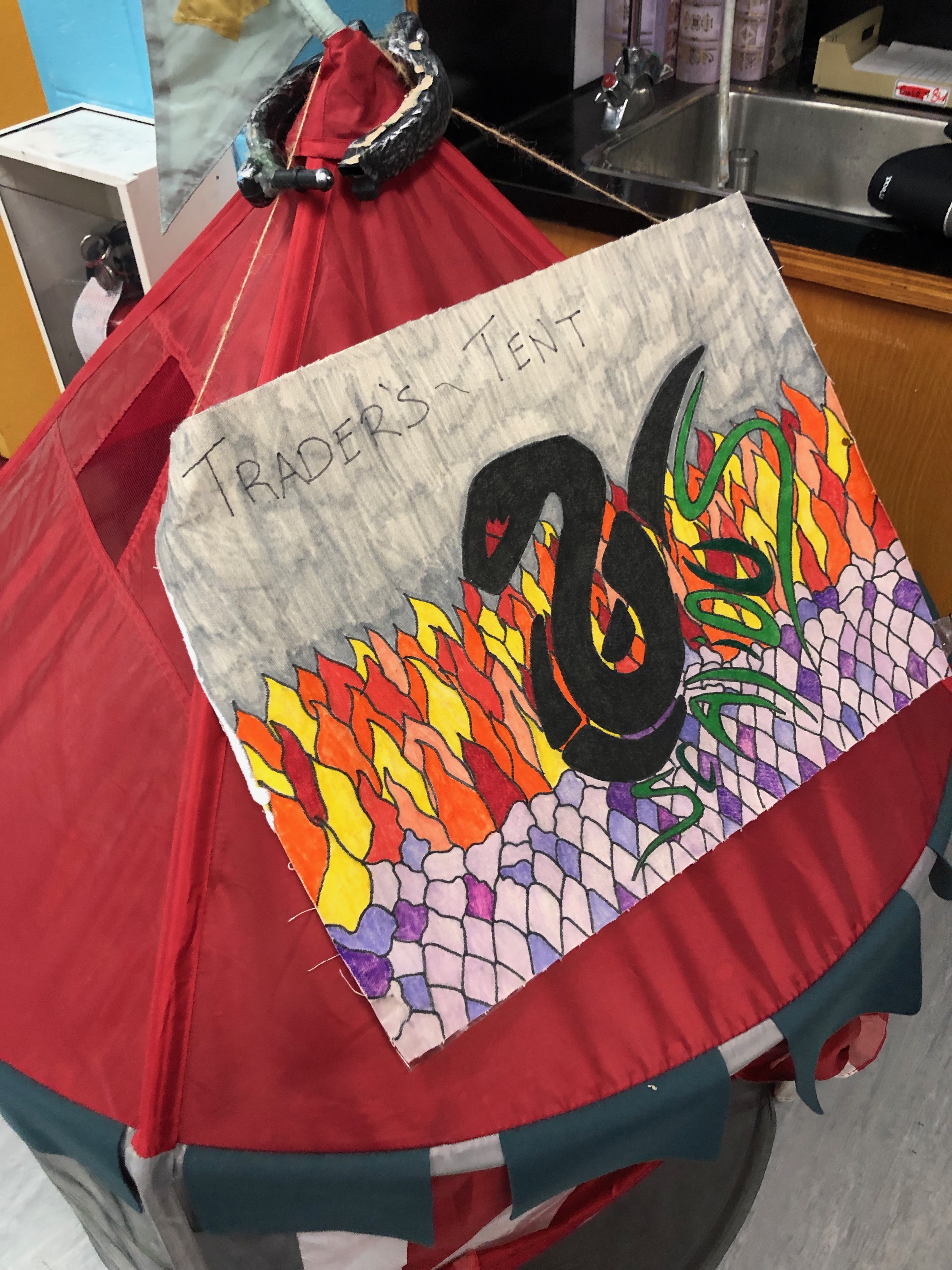
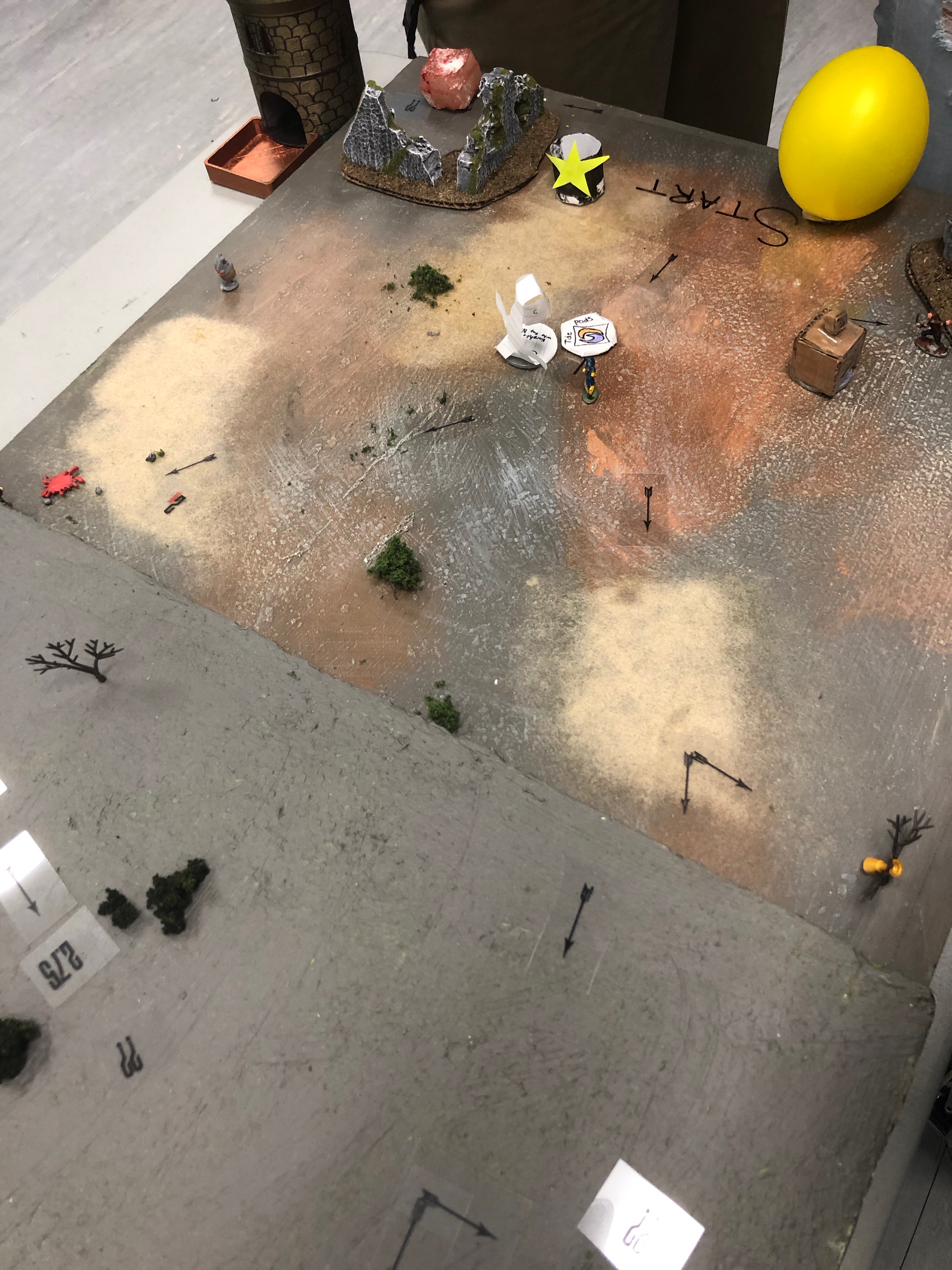
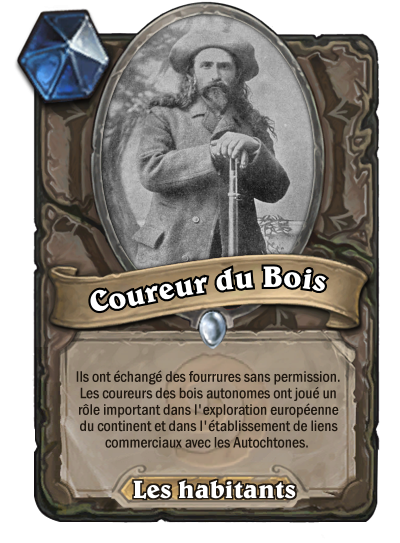
On March 11, a small group of educators from CESD took a professional field trip to Fort Saskatchewan to visit the classroom of Scott Hebert (@MrHebertPE ) to witness an imagination-filled gamified classroom – a game that Mr. Hebert (Master Heebs in game) has invented to suit his own classroom. The majority of items in Mr. Hebert’s classroom have been created by hand, from his own imagination and at minimal cost. In terms of classroom engagement – Wow!! The story of Scientia Terra has his students working (call it playing – it sounds so much more pleasant!) and learning. Scott is very active on social media, he facilitates excellent conversations on Twitter, his YouTube channel is very active, and he’s even done a TED talk about it!!

If you’re interested, please check out his online resources (including the books he has written) as you will see much more. We’ve posted only photos that do not include students for privacy protection. Scott has permission to show much more than we can!


“Jeopardy” Made Easy

I searched high and low last year for a jeopardy game to use in my French Classes. I ended up paying for one, and it was pretty “meh”, but it was the best thing I could find (playfactile.com was the website).

This morning, while searching for a different classroom utility, I found FLIPQUIZ. An online Jeopardy simulation. While I admit, I’ve not used it in a classroom, I’d have been all about giving it a try in my classroom last year.

If you do use this one, I’d love feedback on Google Classroom as to how it went, and any tips you might have for using it!

Fall Gamification Update

The process of gamifying French as a Second Language has taken a large chunk of time to plan, prepare and execute; hence the time away from my blog posting. I have been extremely pleased with the results to date. Student engagement is at an all-time high for a second language class, and students report genuinely looking forward to this class. Interesting points and comments so far include:

“My son is really enjoying French this year. Like really enjoying it. And if I’m being honest, I was very very worried about him having that class this year.”

“Mrs. Baragar, this is my very favourite class, and it’s not even close! I love French!!”

This was the purpose and was certainly my intention when I made the choice to go this route with this new (although very old, French is my undergrad major) teaching assignment. In fact, it is going so well that I’ve already been asked if I would entertain teaching a grade nine level course – an offering we’ve not had in my school for many years.

Inventing games for the grade seven level can be quite challenging; they are at an absolutely beginner level with the language, so developing some basic knowledge was almost critical in order to be able to play many mini games. A successful game has been the ping pong balls. I have a bucket filled with ping pong balls, each with a point value written on the ball. I pose review questions at the start of class, and a correct answer (or genuine effort – pronunciation is not a big issue at this stage of learning) the student receives a ball. When everyone has a ball – or two, or three, they add up their total points and submit it to me on a “points tally” slip.

Points translate to cards, and cards enable the student to thwart the actions of others in a larger game scenario (eg: Jeopardy).

Challenges to this model of teaching and learning seem to be specific to the school’s timetable. The way we function right now, option classes run for a full year, and I only have each class two time per week; though occasionally I have them on a Friday. From time to time, depending on the timing of assemblies and other school activities a week can pass between classes. This makes it somewhat difficult to hold an expectation on retention of learning, and certainly prohibits my teaching French IN FRENCH.

ABOVE: Students (Hockey Program Boys) stay into lunch voluntarily to complete a French quiz to achieve full points!

Fantasy Cartography

The game designs and plans are coming along nicely.  I’ve got the website started; URL will be revealed soon.

I’m drooling over the Fantasy mapping software as I work to create the map of the island the game will be set on. The Pro Fantasy Software product “Campaign Cartographer 3” looks excellent. I just want to be certain that $44.95 (USD) is worth it.  I don’t want to spend days and days learning a new piece of software just to create a map; but I also recognize that the map is a key component in writing the narrative, and in making the game itself make sense to me, and, perhaps more importantly, to my students.

The beta map creator at Inkarnate is fun to play around with, but I feel like my maps look a little bit infantile once created.  However, it’s free and it’s quick!

Perhaps I’ll see if someone on Fiverr wants to create me a map and I’ll save myself the challenge of becoming a cartographer!


Edited to add that in the end I used fiverr to create the map.

The ongoing card design

I am amassing a few resources now for my gamified French 7 & 8 classes.  Amazon Prime Day was a big help for that.  I even got an awesome set of skeleton keys (you can’t open a lock without finding the key first!) to build into the game.

Here is a sampling of the first Power Cards.

They will be embellished with different sheens and colours to differentiate the very rare ones from the more common ones. I have a few things to figure out yet with the card generator that I’m using.

The kids do not speak French. At all. The language on these is WAY above their capability. But that’s part of my differentiation plan. Those who put more into learning the game will acquire a broader and more robust vocabulary in so doing.

The cards will come into play in class, as part of a bigger game. I’m working on the Narrative right now.

I have attack cards in the works as well that they can use during tests, quizzes etc. to look up an answer to skip a question etc. But those cards will be earned during class time. There’s an element of chance to it all, but there’s also going to be skill built into the games.

Some preliminary ideas for learning games and formative assessment:

I’ll use the drones from my tech classes to conjugate verbs outside using a grid and sidewalk chalk. That way the kids who are better with motor skills, but weaker academically play a valuable part.

We’ll do Jeopardy but they can use the cards for extra time, to cause another player to miss a turn, to double point value etc.

We’ll do pictionary-type4 activities, we will use our devices with apps like Kahoot and Socrative for fast-paced answers.

I have a million ideas. I’m glad I knew about this new teaching assignment before the summer so I’d have a chance to put into play a bunch of the research I did with my M.Ed. I want this to be minimal paper and maximum learning. I’m using the work of Yukai-Chou and his Octalysis model as the backbone, and conferring (via Twitter!) with Scott Hebert who built a grade 8 science class in a gamified structure. His knowledge of resources and gamification has been invaluable.

I’ve secured my web address at which to start building the mini games and battles, and to house the videos.

First Cards

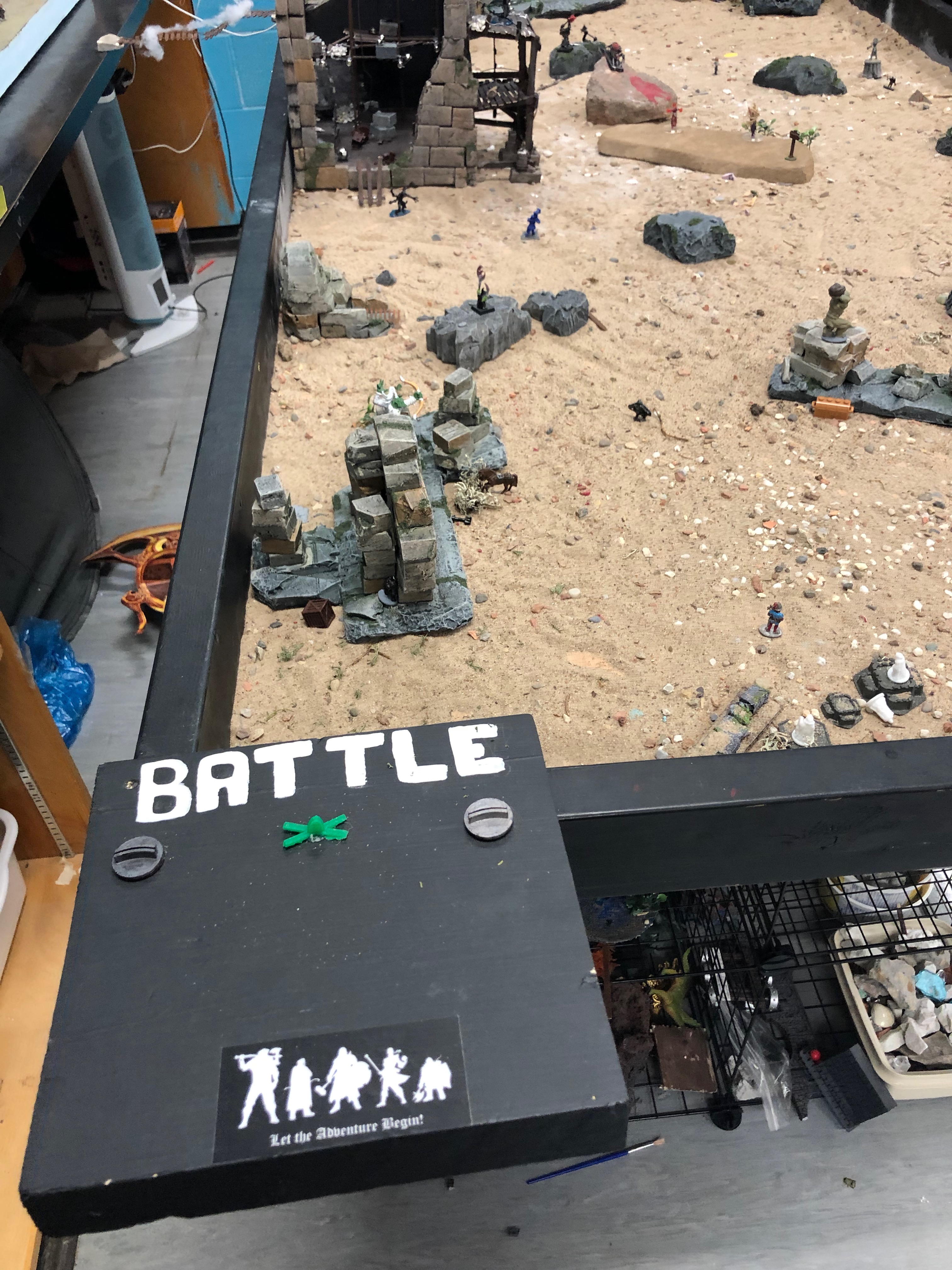
Using the Hearthstone Card Generator, I am creating the initial character cards for students.  These cards are based on French Canadian History, and the game will facilitate advancements and gains to mimic the cultural change of the past 150 years.

Les habitants will be the base level of player.  All students will begin in the class “Les habitants.

The Gamification of French Second Language

I have been assigned four classes of introductory French Second Language next year.  My undergraduate major was French Second Language and my minor was French Immersion.  I am choosing to take on the challenge of gamifying these two courses; this will be an instructional design challenge unlike any I’ve attempted before, and I am super excited about this.  I will be following the lead of Master Heebs from Scientia Terra in my creation; what he has done in his grade eight science class is outstanding and I am looking forward to the challenge.  I too will be following the Octalysis gamification framework developed by Yukai Chou to create these two courses.

I’m starting at the narrative level to create the story and the mission, to give meaning to the work that students will do throughout the year.  I’ll use a series of cards to bring French Canadian history and culture into the coursework in a simple, fun, memorable way.  We’ll add in some magic, some skills, some luck and some student control and we will MAKE FRENCH LANGUAGE LEARNING FUN AND SUCCESSFUL.

CHALLENGE ACCEPTED.

iPad Tabs

I am going to do a series of blog posts called “iPad tabs”. I spend time in the evenings engaging with my online Professional Learning Networks (PLNs), and inevitably I wind up with multiple tabs open on my iPad that intrigue me for both professional and personal reasons.  I am going to post my tabs here for my own reference, and for my blog readers as well!!

Google Assistant – CNet Article, May 2017

ISTE – I am a Digital Learner Poster

Epraise School Rewards System

Tagxedo – Word Clouds with Style

The Guardian – Study: Positive Link Between Video Games and Academic Performance

Learning to Solve a Rubik’s Cube

Difficulty in Video Games

Apps and Websites Kids use instead of Facebook

Testing the Go Animate embedded player

I’ve run into a javascript error when trying to export my video from Go Animate directly into my YouTube channel, and am waiting for it to export the video as a .mp4 file that I can “paste” together with the remaining 4 minutes that need to be added.  While it’s exporting, I thought I’d use take the opportunity to test the native player that Go Animate offers.  So, here is part 1 of my video.


Inspiration

Dr. Jane McGonigal inspires me.  What she sees in games, and in gamers inspires me to consider how that can inform pedagogical adjustments.  I’m not proposing we throw out everything in favour of games; but I find it hard to ignore her statement that “Gamers are super-empowered hopeful individuals”. I see gamers come through my computer lab by the hundreds each year, and I am inclined to agree with that statement.

Her observations further include that gamers encompass:

Urgent Optimism
Social Fabric (they network and collaborate naturally)
Blissful Productivity
Epic Meaning

I encourage everyone to spend twenty minutes watching her most excellent TED talk – and understand that it is from 2010. Consider what has changed in your own world since this talk was given.

Pin It on Pinterest